
Table of Contents
Doors are something most homeowners use every day without giving much thought to how they work. While they may appear to be a simple part of the home, every door is made up of several components that work together to provide security, privacy, smooth operation, and, in the case of exterior doors, protection from the elements.
Each part has a specific purpose, and when one component begins to wear or fail, it can affect the performance of the entire door. Understanding the different parts of a door can help homeowners identify potential issues and make more informed decisions when maintaining or replacing it.
Every Door Relies on Several Key Components
Whether it’s an interior bedroom door or the front entry to your home, every door consists of multiple parts that work together. Some components provide structural support, while others allow the door to open, close, latch, and lock properly. When these parts are working as intended, the door operates smoothly and reliably for years.
Although door designs vary by purpose, most residential doors share the same basic anatomy. Becoming familiar with these components makes it easier to understand how doors function and why proper installation is so important.
Door Slab
The door slab is the main panel that swings open and closed. It is the largest and most visible part of the door, serving as the barrier between two spaces. Door slabs are available in a variety of materials, including wood, fiberglass, steel, and composite products, each offering different benefits depending on where the door is installed.
For exterior doors, the slab also contributes to energy efficiency, security, and weather resistance. Interior door slabs, on the other hand, are primarily designed to provide privacy and separate living spaces within the home.
Door Frame
The frame surrounds the door opening and supports the entire door system. It provides the structure that holds the hinges, helps keep the door properly aligned, and allows the slab to open and close smoothly. A properly installed frame is essential for the long-term performance of any door.
If the frame becomes damaged, warped, or out of alignment, homeowners may notice sticking, uneven gaps, or difficulty latching the door. Even a high-quality door slab cannot function properly without a stable frame supporting it.
Hinges
Hinges connect the door slab to the frame and allow the door to swing open and closed. They also support the full weight of the door, making them one of the hardest-working components in the entire system. Most residential doors use two or three hinges, depending on the door’s size and weight.
Over time, hinges can experience normal wear, become loose, or require adjustment. Properly installed hinges help the door move smoothly while maintaining consistent alignment with the frame.
Handle and Lockset
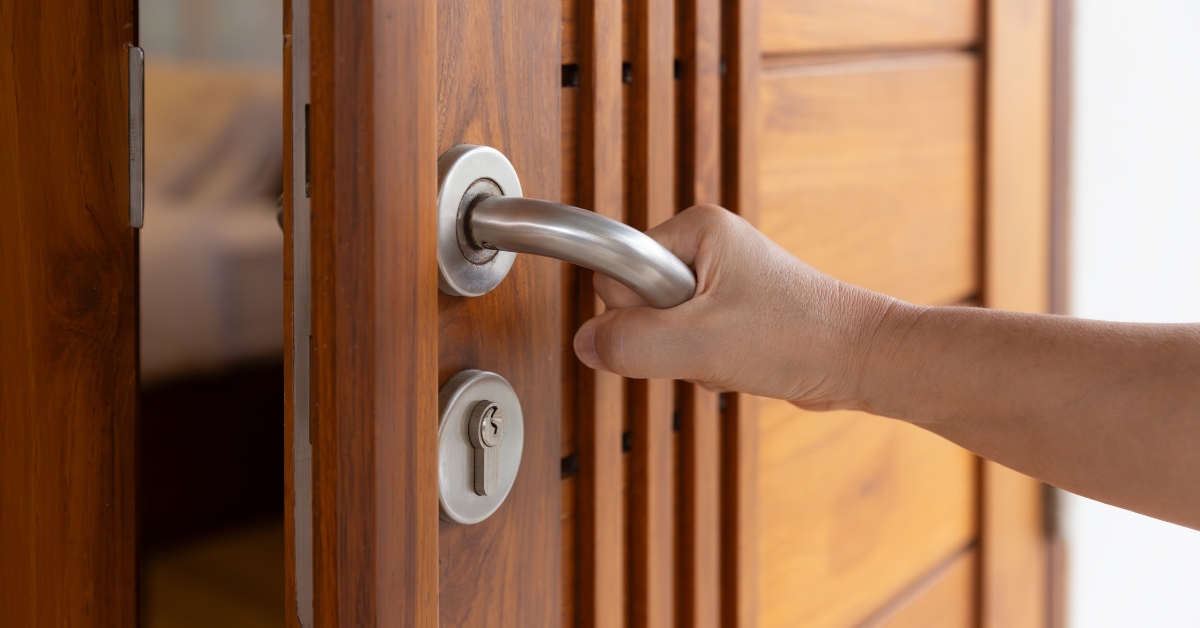
The handle and lockset allow homeowners to operate, secure, and lock the door. Depending on the type of door, this hardware may include a knob, lever, keyed lock, deadbolt, or privacy lock. These components are used countless times throughout the door’s life and play an important role in both convenience and security.
For exterior doors, the lockset is one of the home’s primary security features. Interior doors typically use simpler hardware designed to provide privacy rather than security.
Strike Plate
The strike plate is the metal plate mounted on the door frame where the latch or deadbolt engages when the door closes. Although relatively small, it plays an important role in helping the door latch securely and protecting the surrounding wood from repeated wear.
A properly installed strike plate also contributes to security by providing a reinforced surface for the latch or deadbolt. If it becomes loose or misaligned, the door may not close or lock as intended.
Exterior Doors Include Additional Protective Components
Exterior doors must do much more than simply separate two spaces. They also help protect the home from wind, rain, temperature changes, moisture, and outdoor debris. Because of these additional demands, exterior doors include several components that are not typically found on interior doors.
These features work together to improve comfort, support energy efficiency, and help create a weather-resistant seal around the door opening. When functioning properly, they contribute to the long-term performance of the entire entry system.
Weatherstripping
Weatherstripping is installed around the edges of an exterior door to help seal the small gap between the door slab and the frame. This flexible material helps reduce unwanted air movement while limiting the entry of moisture, dust, and insects.
As weatherstripping ages, it may become compressed, cracked, or worn. Replacing damaged weatherstripping can often improve the seal, but if the door or frame itself has deteriorated, a full replacement may be the better long-term solution.
Threshold
The threshold is the horizontal piece located at the bottom of an exterior doorway. It creates a transition between the inside and outside while helping support the seal beneath the door. The threshold also works with the weatherstripping and door sweep to help reduce drafts and water intrusion.
Because it experiences constant foot traffic and exposure to the elements, the threshold must be durable and properly installed. Damage or improper alignment can affect both the comfort and performance of the door.
Door Sweep
Attached to the bottom edge of many exterior doors, the door sweep helps close the gap between the door and the threshold. This simple component provides an additional barrier against drafts, insects, dust, and wind-driven rain.
Like weatherstripping, door sweeps naturally wear over time through regular use. A worn or damaged sweep may leave visible gaps beneath the door, reducing the effectiveness of the overall seal.
Glass Inserts
Many exterior doors feature decorative or functional glass inserts that allow natural light into the home while maintaining the door’s appearance and performance. Modern glass options are available in a variety of styles, privacy levels, and energy-efficient configurations.
When properly manufactured and installed, glass inserts become an integrated part of the door system. They provide additional visual appeal while contributing to the overall function of the entry door.
Every Part Works Together
Although each door component serves its own purpose, none of them operates independently. The slab, frame, hinges, hardware, and weather-resistant features all work together to create a door that opens smoothly, closes securely, and performs reliably. When one component begins to wear or fail, it can place additional stress on the rest of the system.
Understanding the different parts of a door helps homeowners identify potential issues before they become larger problems. Whether you’re replacing worn hardware or installing a new exterior door, considering the entire door system helps ensure lasting performance and dependable operation.
Professional Installation Helps Maximize Performance
Even the highest-quality door components depend on proper installation. A door must be level, square, and correctly aligned within the opening for every part to function as intended. Accurate installation also helps create consistent gaps, smooth operation, and an effective weather seal.
Professional installation helps ensure every component works together as a complete system. This attention to detail supports long-term durability while allowing homeowners to get the most from their investment.
Exterior Door Replacement in Atlanta, Georgia
Every door is made up of multiple components that work together to provide security, comfort, and dependable operation. From the frame and hinges to the weatherstripping and threshold, each part plays an important role in the performance of the entire door system. Understanding how these components function can help homeowners make informed decisions when maintaining or replacing an exterior door.
At AAA Screen & Window, we’ve helped Metro Atlanta homeowners upgrade their exterior doors since 1959. If your entry door is hard to operate, showing signs of wear, or nearing the end of its lifespan, we can help you choose a high-quality replacement that improves both the look and performance of your home.
FAQ About The Parts of a Door
Accordion Content
The main panel that opens and closes is called the door slab. It is supported by the frame and connected with hinges.
The door frame supports the entire door system, keeps the door properly aligned, and provides the structure needed for smooth operation and secure latching.
Weatherstripping helps create a seal around an exterior door to reduce drafts, moisture, dust, insects, and unwanted air movement.
The threshold is the fixed component attached to the floor beneath the door, while the door sweep is attached to the bottom of the door itself. Together, they help create a weather-resistant seal.