
Table of Contents
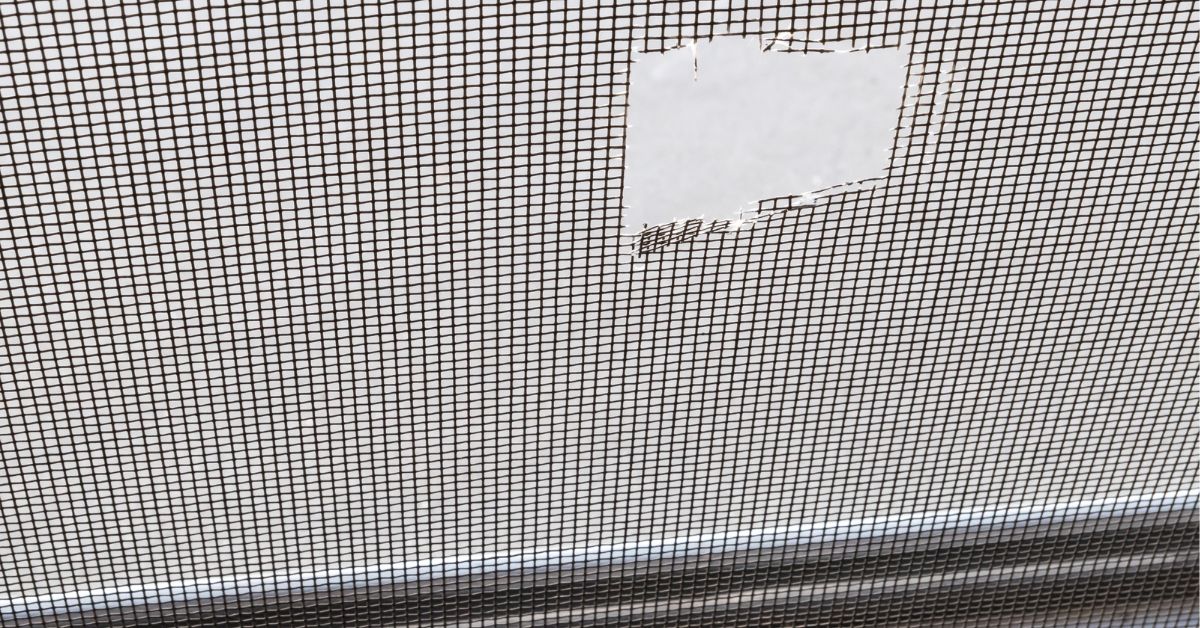
Yes. You can usually replace just the mesh if the screen frame is straight, the corners are firm, and the frame still fits snugly in the window. Even a large tear can be fixed with new mesh. A screen that moves or leaves a gap needs a closer look. It might have a loose clip, or the frame itself might be bent. Take a minute to check both before you buy anything.
How To Tell if Your Screen Frame Can Be Reused
Here is what to look for to determine if you can reuse your window frame or if you will need to replace it.
Look for Bent Sides
Look down each side of the frame the way you’d look down the edge of a ruler. A bend may run along most of the side or show up as a small kink. Check whether the frame rocks on the table when you lightly press a corner. That can be a sign the frame is twisted.
Remember where you saw the bend. Once the screen is back in the window, look for a gap in that same spot. A bend that lets bugs in around the edge is a reason to replace the frame.
Check for Loose Corners
Hold the two sides that meet at a corner and gently wiggle them. If they move apart, the small piece that joins them may be loose or broken. You may be able to replace that piece if both sides of the frame are still in good shape.
Also look at the narrow groove around the frame. It holds the spline, the flexible cord that presses the mesh into the groove and keeps it in place. A loose cord can let the mesh sag. A crushed or split groove can make it hard for a new cord to stay in place.
Make Sure the Screen Fits the Window
Put the screen back in and look for gaps around the edges. Take it out and try again if one edge sticks out. Make sure that edge slides into the track where it belongs. A straight frame can look bent when one side is sitting outside the track.
Give the screen a gentle nudge. If it sits flat but shifts when you let go, check the clips or springs that hold it in the window. A missing clip can make a good frame seem like a bad fit.
Should You Replace the Mesh, Fix a Clip, or Get a New Screen?
Start with the part that’s causing the problem. Here’s how that looks in three common situations.
| What you find | What to do |
|---|---|
| The mesh has a hole, but the frame fits snugly. | Replace the mesh. Keep the frame as long as the groove can still hold the cord securely. |
| The frame sits flat, but the whole screen moves in the window. | Check the clips or springs. Replacing a missing or worn piece may be enough to hold the screen in place. |
| The frame is cracked, missing, or bent enough to leave a gap. | Replace the whole screen. The new frame needs to fit the opening and stay in place. |
A custom replacement window screen can be made to fit if your old frame is damaged or missing. If you have another screen that fits an identical window, keep it handy. It can show how the replacement should sit and where the clips belong.
What Happens When You Replace the Mesh?
The old cord comes out first so the mesh can lift away. This is a good time to check the groove for dirt or damage. The new mesh goes over the frame, and you press a cord into the groove to hold it. The extra mesh is trimmed once it’s secure.
The mesh should lie flat without pulling the sides of the frame inward. Check the fit in the window again when the job is done. A screen can look fine on a table and still leave a gap if the mesh was pulled too tight.
Can You Switch to a Different Kind of Mesh?
Often, yes. Think about what you want from that window before you choose a new screen material. Pet-resistant mesh may make sense where a cat paws at the screen. A finer-looking mesh may suit a window where you want a clearer view outside.
Thicker mesh takes up more room in the groove. That can mean you need a thinner cord to hold it in the same frame. The cord should stay in place without forcing it in. If it’s too loose, the mesh can slip out along the edge.
What If the New Mesh Sags or There’s Still a Gap?
Look at where the problem shows up. If the new mesh sags inside the frame, follow the wrinkle to the nearest edge. Look for a spot where the cord has lifted, or the mesh has slipped free. You may be able to fix that edge without starting over.
For a gap around the outside of the frame, check that every edge is in its track and the clips are holding. If the screen fit before the repair but now has a gap halfway down one side, look for a bend along that side. Knowing when the gap appeared can help you tell loose mesh from a bent frame and decide what actually needs fixing.
FAQ About Window Screens & Frames
Accordion Content
Sometimes. The spline is the flexible cord that holds the mesh in the frame. You may be able to reuse it if it comes out in one piece, still bends easily, and holds the new mesh firmly in the groove. Replace it if it cracks as you pull it out or sits loosely once you put it back. A different mesh thickness can also change which cord fits.
Yes. A small hole in otherwise flexible mesh can often be covered with a screen patch. Look at the mesh around the hole first. If it feels brittle or the tear reaches the edge of the frame, replacing the mesh makes more sense because there may be too little sound material for the patch to grip.
No. You can replace the mesh on just the torn screen if its frame is still in good shape. If the windows sit side by side, compare the new mesh with a neighboring screen in daylight. Differences in color or how much you can see through the mesh are easier to spot when the screens are next to each other.